The Magic of Gradients: Recreating Ukiyo-e “Bokashi” with Colored Pencils
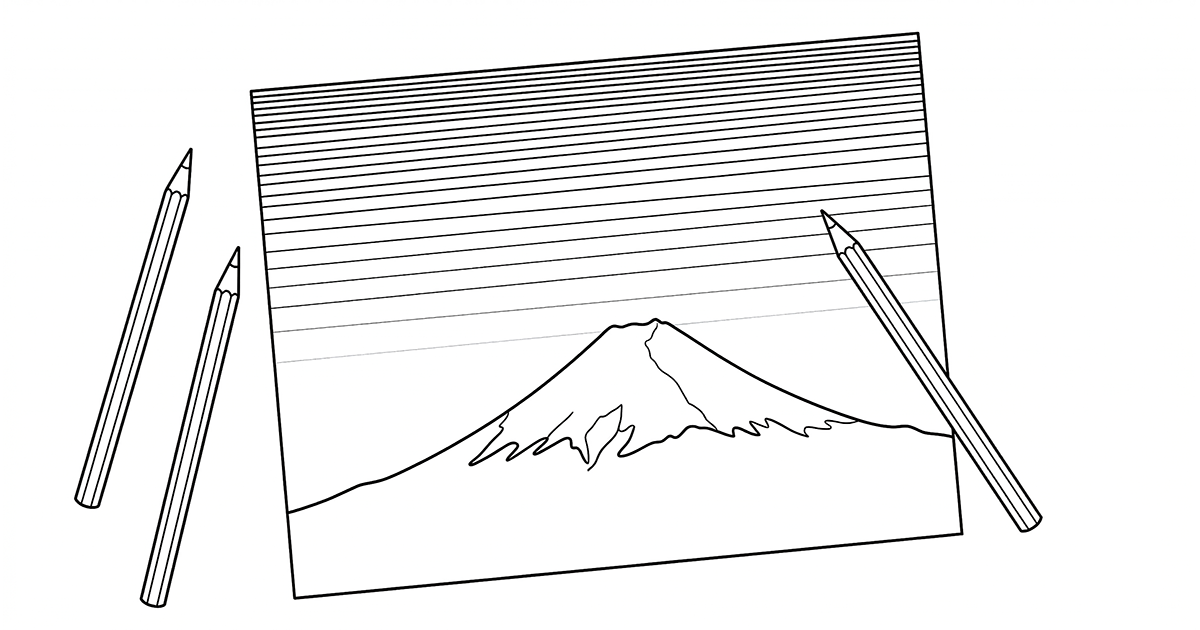
One of the most striking features of ukiyo-e prints is their smooth and atmospheric gradients. From the soft fading of the sky to the gentle transitions in water, these effects give the artwork a sense of depth, time, and movement.
This technique is known as bokashi, and while it originated in traditional woodblock printing, it can be beautifully recreated with colored pencils. By understanding both the concept and the technique, you can bring a new level of expression to your coloring.
The Mechanism Behind Bokashi
In traditional ukiyo-e, bokashi is not simply a painting effect—it is a physical process. Artisans would carve the woodblock at an angle, allowing ink to be applied unevenly across the surface. This created a natural gradient when printed.
In other words, the gradient was not just visual, but structural. The thickness and pressure of the ink changed across the surface, producing a smooth transition.
Understanding this idea helps when recreating the effect with colored pencils. Instead of thinking only about color, you begin to think about pressure and movement.
Capturing Light and Atmosphere with Gradients
Gradients in ukiyo-e often represent subtle changes in time and atmosphere. A fading sky might suggest sunset, while a soft transition in water can create a sense of calm motion.
When applying this to coloring, avoid harsh transitions. Instead, aim for gentle shifts between tones. Think of your colors as blending into each other naturally, rather than being clearly separated.
The goal is not perfection, but a feeling—something soft, continuous, and organic.
Controlling Pressure with Colored Pencils
The most important technique when recreating bokashi is controlling your pencil pressure.
Start from the area where the color should be strongest. Apply slightly more pressure at the beginning, then gradually lighten your touch as you move outward. Let the pencil glide softly across the paper, almost as if you are brushing the surface.
This motion—strong to soft, near to far—is what creates a natural gradient. Avoid pressing too hard, especially toward the lighter end.
Adjusting with a Kneaded Eraser
Even with careful technique, uneven areas can appear. Instead of rubbing them away, use a kneaded eraser.
Gently press the eraser onto the surface to lift small amounts of pigment. This method allows you to soften transitions and reduce excess color without damaging the paper.
Think of it as “lightening” rather than erasing. This subtle adjustment can greatly improve the smoothness of your gradient.
Blending Colors with a Blender Pencil
For an even smoother finish, you can use a colorless blender pencil.
This tool helps push pigment into the paper and merge neighboring colors. It is especially useful when combining two different hues in a gradient.
Use it lightly, following the same direction as your original strokes. Too much pressure can flatten the texture, so gentle control is key.
Final Thoughts
Bokashi is more than a technique—it is a way of expressing softness, atmosphere, and time.
By focusing on pressure, movement, and subtle adjustments, you can recreate this traditional effect with simple tools like colored pencils.
Take your time, work gently, and allow the colors to fade naturally. In doing so, you bring a quiet elegance into your work—one that reflects the spirit of ukiyo-e itself.